
Is Your Movement Helping You Live the Life You Want?

Movement Has a Purpose
Fall is a season of change. Schedules shift, temperatures start to cool down, and we naturally find ourselves thinking about what we want the next few months to look like. It can also be a good time to pause and think about something we don't always consider: Why am I moving in the first place?
We hear a lot about what we should be doing—strength training, walking, cycling, getting our steps in, doing cardio. And while all of those can provide important health benefits, there isn't one perfect way to move.
The right movement for you depends on what you want that movement to do for you.
Training for Performance vs. Moving for Health
There's a difference between training for a specific performance goal and moving to support your health and the life you want to live.
Someone training for a marathon, preparing for a competition, or trying to improve their golf game may have very specific performance goals. Their training is designed around becoming better at a particular activity.
But maybe you're not trying to compete.
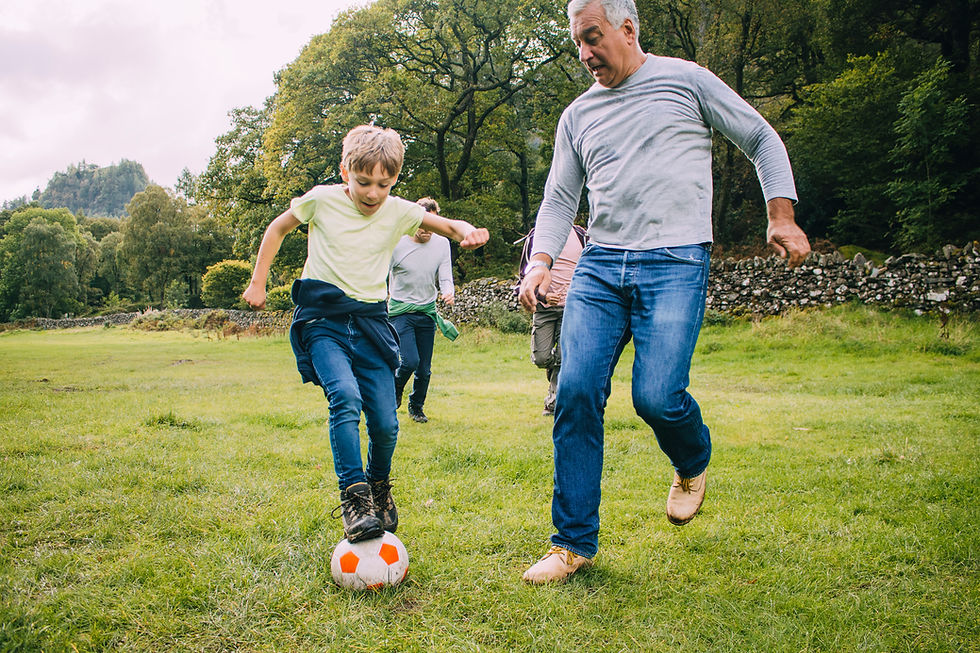
Maybe you want to keep up with your grandchildren. Maybe you want to travel without worrying about whether you'll be able to handle the walking. Maybe you want to feel stronger getting out of a chair, have more energy throughout your day, or find an activity that helps you manage stress.
Those goals are just as valid—and they may call for a very different approach to movement.
What Do You Want Your Movement to Give You?
Instead of starting with “What exercise should I do?”, try starting with a different question:
What do I want to be able to do?
If spending time with your grandchildren is important to you, your movement might focus on strength, balance, mobility, and endurance that help you get down on the floor, get back up, chase them around the yard, or carry them when they're tired.
If traveling is a goal, walking may help build endurance, while strength and balance can make stairs, hills, uneven sidewalks, and carrying luggage feel more manageable.
If mental well-being is a priority, movement might look completely different. A walk outside can provide physical activity while giving you time away from the demands of the day. A yoga class might combine movement with relaxation. Swimming or another recreational activity might give you something enjoyable to look forward to.
And if social connection matters to you, movement can be a way to spend time with other people. A walking group, dance class, pickleball game, golf, swimming, or another recreational activity can provide physical activity and connection.
The point isn't to find the activity with the longest list of health benefits. It's to find movement that supports the things that matter to you.
Health Benefits Don't Have to Be Separate From Enjoyment
Sometimes we treat health and enjoyment like they're competing priorities.
They don't have to be.
A walk with a friend can support cardiovascular health, provide time outdoors, reduce stress, and strengthen a social connection. Strength training can help maintain the physical capacity needed for everyday activities while also giving you the confidence to do more of the things you enjoy. Swimming can challenge your cardiovascular system and muscles while being an activity you genuinely look forward to.
Movement can be intentional without feeling like a chore.
In fact, when the movement you choose connects to something you value—or something you actually enjoy—it's much easier to see why you want to keep doing it.
Maybe It's Time to Rethink Your Movement
This doesn't mean your current routine is wrong.
Maybe it's working exactly the way you want it to. Great! Keep going.
But if you've started feeling stagnant, bored, disconnected, or like you're simply checking a box because you were told you should exercise, it may be worth asking yourself whether your movement is still serving you.
You don't necessarily need to do more.
You may just need to do something different.
Think about what you want your movement to help you accomplish, how you want to feel, and what activities you actually enjoy. Then look for ways to bring those pieces together.
A Moment to Reflect
Your movement doesn't have to look like someone else's.
It doesn't have to be the most popular workout, the hardest workout, or the one that burns the most calories. It should have a purpose that makes sense for you.
So as we move into a new season, take a moment to ask yourself:
What do I want from my movement?
What do I want to be able to do?
And most importantly—does my movement support how I want to live my life?
If the answer is yes, keep moving.
If the answer is no, maybe this is your season to try something new.


Comments